Hands and the structures within them are prone to infections from bacteria, viruses and fungal (microorganisms) sources. The anatomy of the hand is complex in that a relatively trivial injury may cause disproportionate amount of harm.
What causes an infection in the hand?
Many infections in the hand can result from a simple cut from a sharp object, including bites from animals. This creates an environment for bugs to enter the wound and spread.
What might increase the risk of infection?
Any patient may get an infection in their hand regardless of any risk factors. However, in patients whose immune system may be compromised, such as in those patients with diabetes, or those being treated taking immunosuppressing medications such as steroids and drugs for rheumatoid arthritis, you may be at risk of a more aggressive infection.
What are the symptoms of a hand infection?
Often patients will present with an area of throbbing pain and redness. The area may be swollen, warm and tender to touch or move. Some finger infections cause the finger to be held in a bent position. There may be evidence of an abscess forming and discharge from a wound. If the infection is more widespread then the patient may have more systemic symptoms such as a fever.
How is an infection diagnosed?
The diagnosis is mainly a clinical one based on the patient’s history and symptoms. Blood tests and tissue swabs may be taken to aid and confirm diagnosis. X-rays may also be taken, more as a screening tool to identify the presence of any bony abnormalities or foreign bodies.
What types of infection do you get in the hand?
Infections can affect any structure within the hand.
The nail and nailbed (Paronychia) – this is an infection involving the tissues around the edges of the fingernail. This is usually a result of nail injury from cutting or biting the nails.
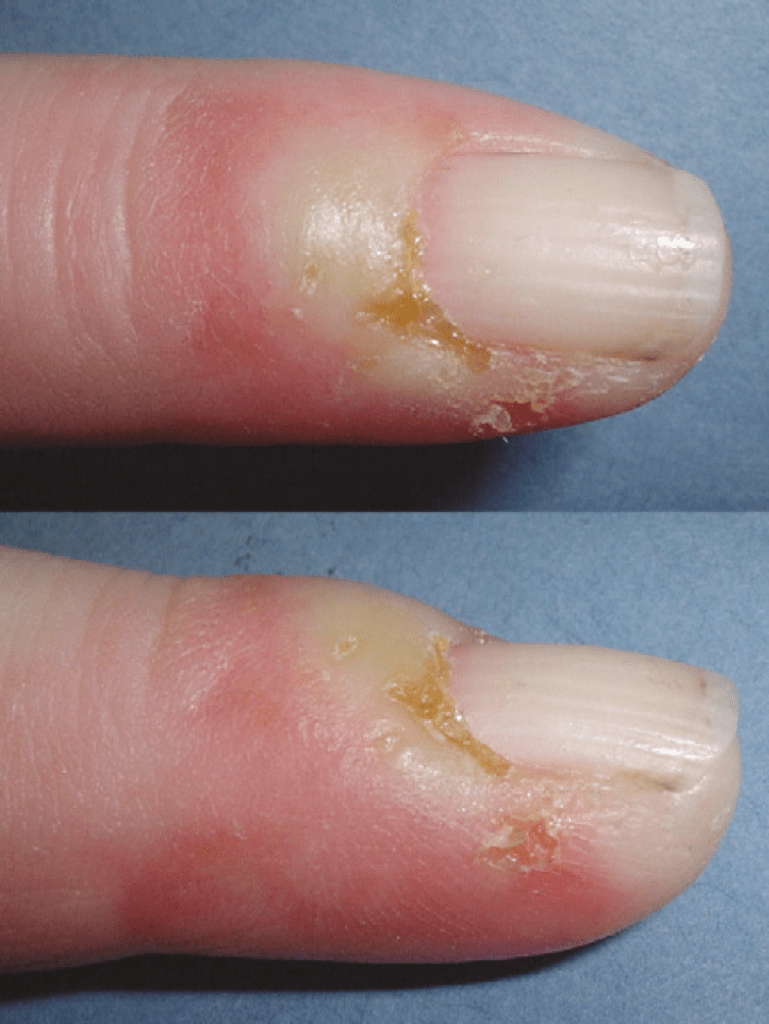
The fingertip (Felon) – this is an abscess of the pulp of the fingertip. This is often caused by a penetrating injury to the fingertip. The pulp contains multiple small spaces within it and causes a build-up of fluid and pressure. This can cause problems with the blood supply resulting in problems with the skin of the fingertip. Rarely can this infection affect the underlying bone.
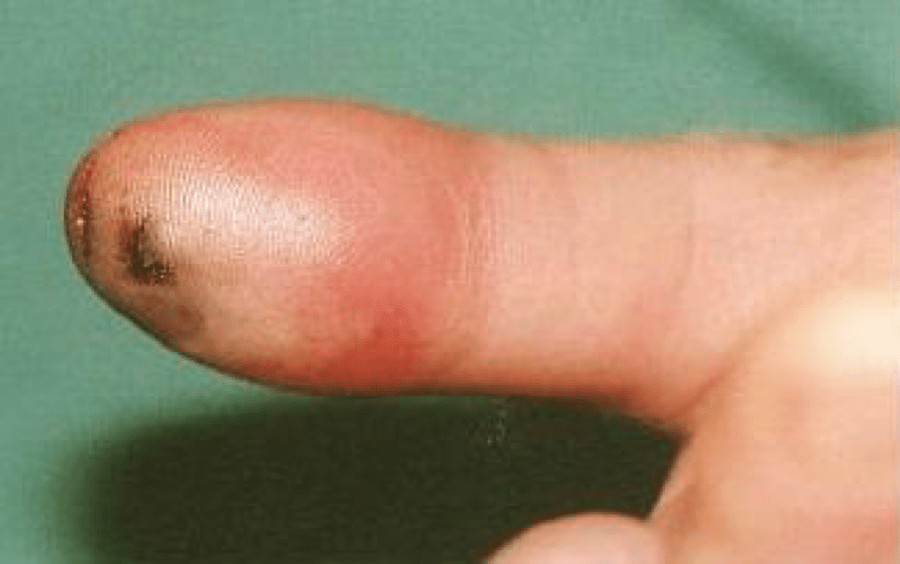
The tendons (Pyogenic Flexor Tenosynovitis) – this is an infection of the tendon sheath that surrounds the flexor tendons (the tendons responsible for closing the hand into a fist) on the palmar surface of the hand. This presents with tenderness over the finger, swelling and pain on straightening the finger. Patients tend to keep their finger in a bent position as it is more comfortable. Often this infection requires surgical intervention as the infection can damage the gliding mechanism of the finger.
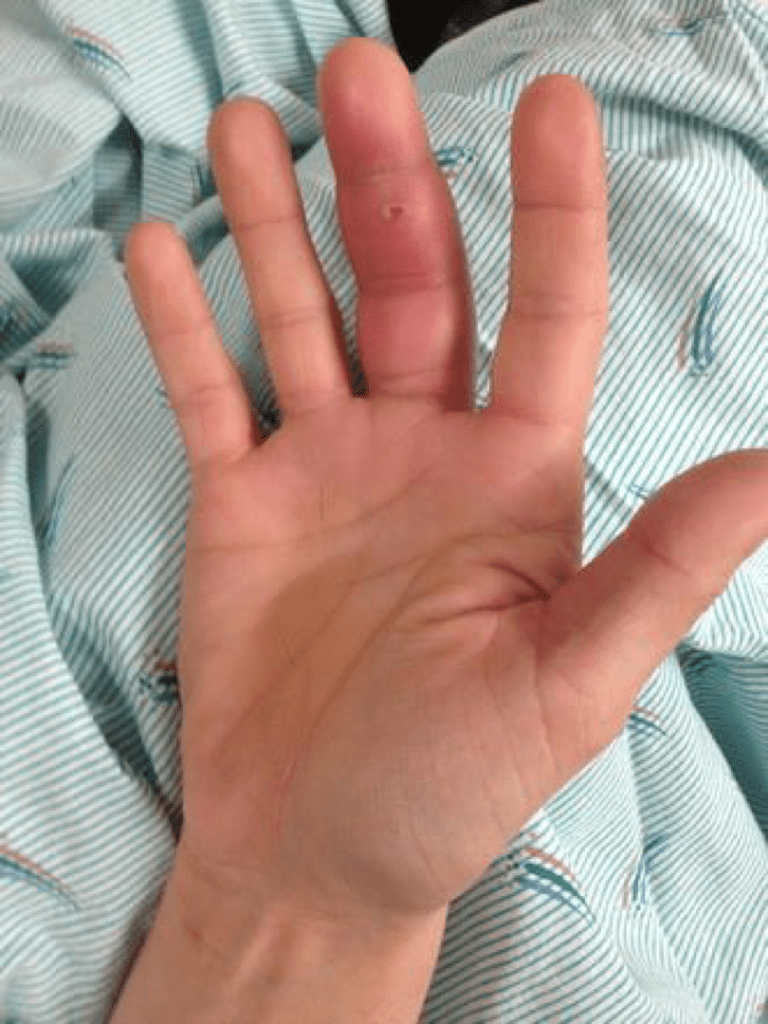
The palm (Deep Space Infections) – There are open spaces in the hand where there is no muscles, tendons or bone. These spaces can become infected, usually from a penetrating injury and are known as deep space infections.
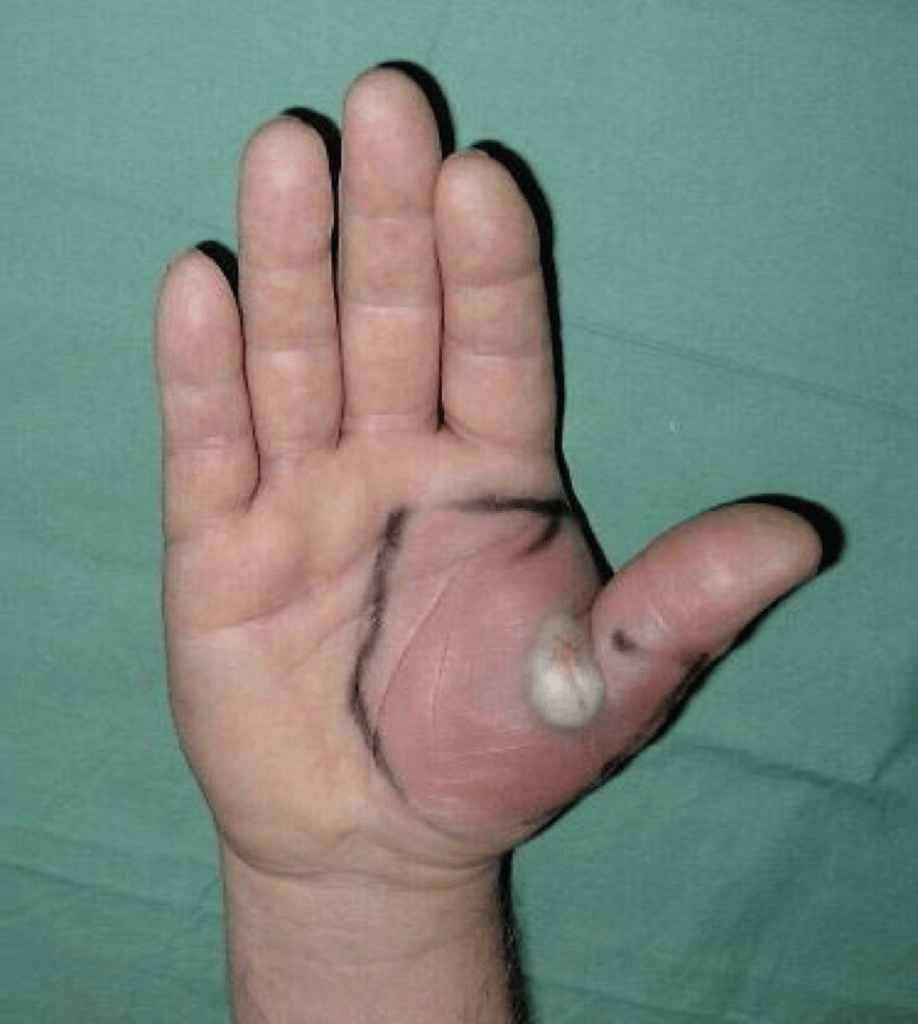
The joints (Septic Arthritis) – this is an infection of the a joint within the hand. The joint becomes red, hot and swollen. This can be confused with other joint problems such as gout.
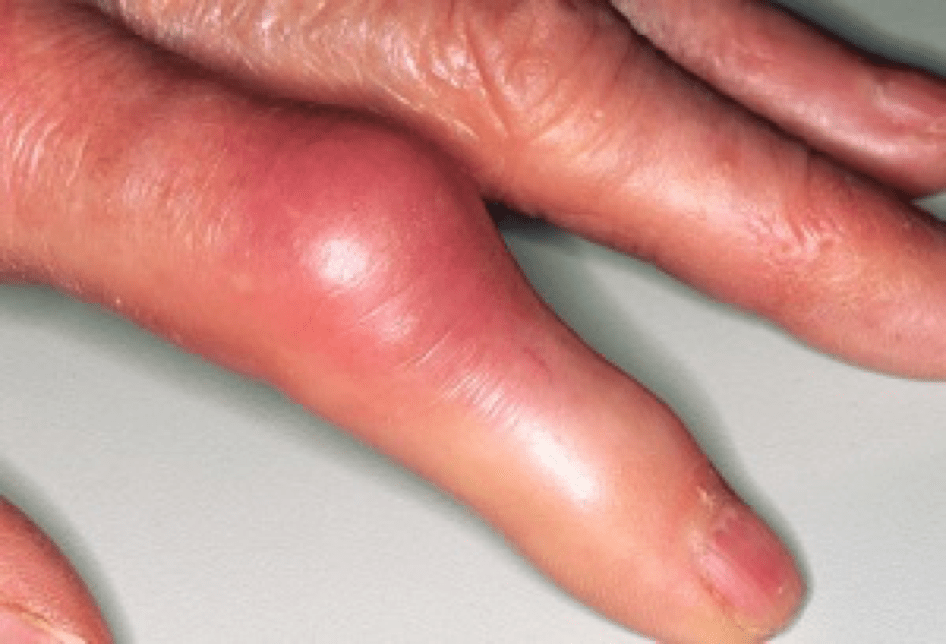
The bones (Osteomyelitis) – Fortunately, we do not see infection within the bones of the hand very often, it has usually spread from another source of infection from within the hand.
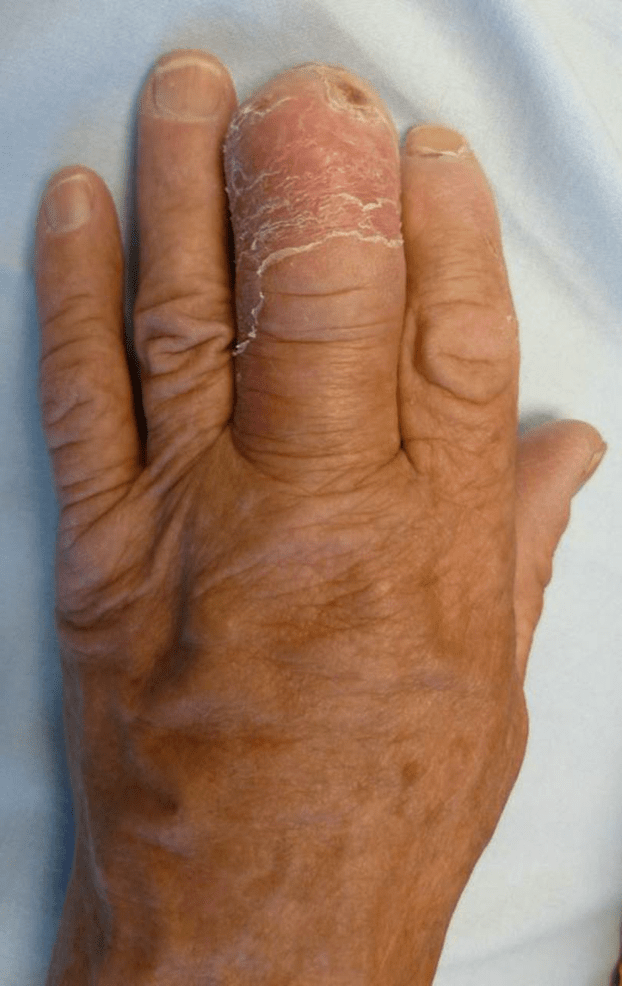
The skin (Cellulitis) – this is an infection of the soft tissue and skin of the hand. This can be caused by a minor scrape or cut to the skin. This can spread quickly throughout the limb.
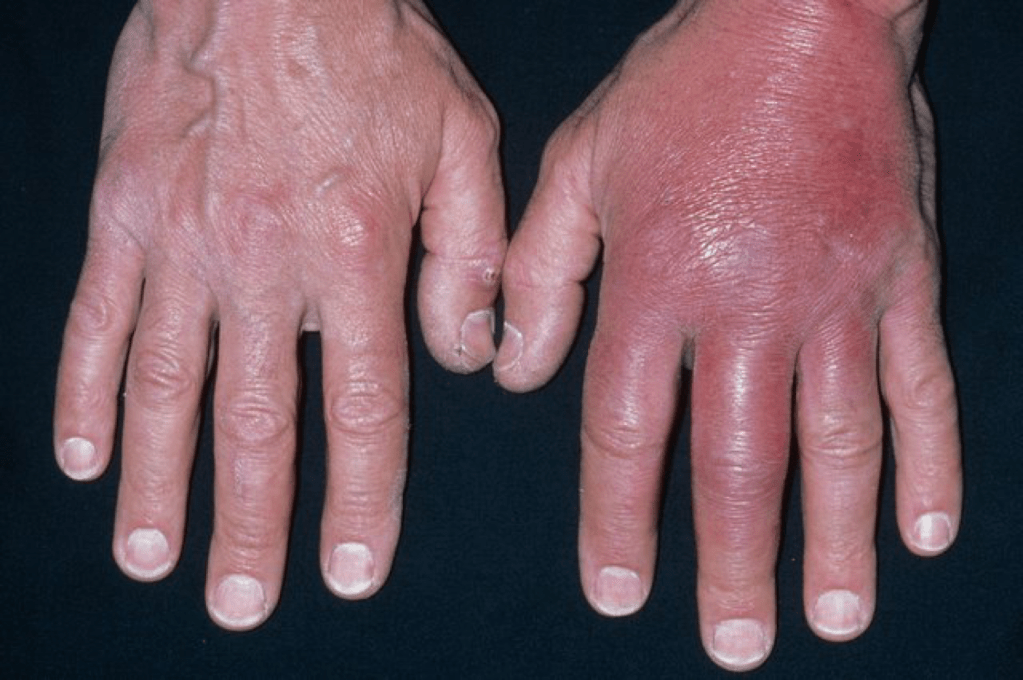
How are hand infections treated?
Treating hand infections requires identification of the microorganism responsible for the infection. If this can be identified then antibiotics can be used to target the infection. The medication may be given as a course of tablets, but more severe infections may require a hospital stay and antibiotics administered via a drip.
If there is a palpable abscess, this may require draining in order to remove any infected tissue. Following drainage, the wound may be left open to prevent the infection reaccumulating.
What is the outcome?
Untreated hand infections can cause severe problems, such as stiffness in the wrist or the fingers, decrease in hand strength and loss of tissue, such as the skin.

© Lothian Virtual Hand Clinic 2023
 Lothian Virtual Hand Clinic