Lumps and bumps may present anywhere in the hand and wrist. The vast majority are not worrying and are benign, that is they are not cancerous.
What causes a lump or bump in the hand or wrist?
Lumps and bumps often have no known cause. However, often they are as a result of overgrowth of normal tissues and this may be precipitated by trauma or injury.
What symptoms may I have?
Apart from seeing an obvious lump or bump most lesions do not give any significant pain or dysfunction. Generally, they can get bigger in size and become more of a nuisance, for example, if the lump or bump is located at the tips of the fingers, it may interfere with fine movements, or elsewhere in the fingers may give difficulties with grip.
Often these lumps and bumps may be an isolated lesion and is not associated with lesions elsewhere.
Rarely, are lumps and bumps around the hand and wrist associated with numbness.
Occasionally the lesion may become infected causing redness, discomfort and sometimes can discharge.
What is the natural history?
For many lumps and bumps, they will slowly enlarge and become more of a nuisance.
Are there any tests that may be performed?
Most lesions around the hand and wrist can be diagnosed clinically without the need for investigation. However, in some select cases, scans such as X-rays, ultrasound and MRI may be performed. If the diagnosis is uncertain, then a biopsy may be recommended.
What are the treatment options?
For many lumps and bumps around the hand and wrist, they can be left alone in the knowledge that it may slowly grow larger and interfere with function.
Surgical options include removal/excision. This is usually performed under local anaesthesia.
Medical treatments, such as drugs and diet, do not alter the lump.
What type of lumps and bumps do you get around the hand and wrist?
There are many types of lesion that present around the hand and wrist. Below are a selection of the common ones we see in Fife. (By no means is this an exhaustive list)
Ganglion Cysts
These are the most common lump in the hand. They tend to arise near a joint or a tendon. They are benign and filled with a jelly like fluid which can fluctuate in size. Many disappear without treatment. See our patient information leaflet on Ganglion cysts.
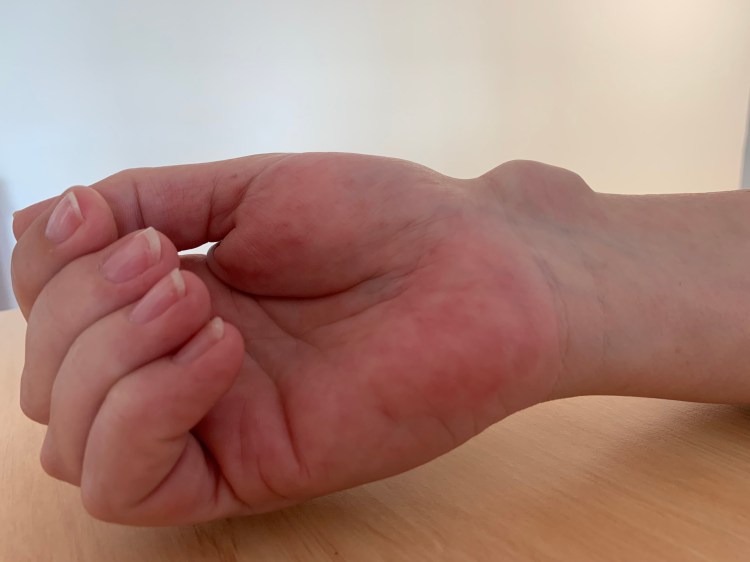
Mucous Cysts
These are benign lumps that occur at the end joint (DIP joint) of the fingers. They are a specific type of ganglion cyst and are associated with arthritis. A ridge can develop within the fingernail. The cysts may fluctuate in size and disappear on their own. See our patient information on Mucous Cysts.

Epidermal Cysts
These arise from just under the surface of the skin and are often related to a penetrating injury to the skin. Often there is displacement of the top layer of skin (epidermis) to deeper layer. Skin cells naturally produce a waxy substance called keratin and often a central keratin punctum can be seen. They are often asymptomatic, slow-growing, firm and round. Foreign bodies, such as splinters may also cause a reaction that forms a lump in the hand in a similar fashion to an epidermal cyst.

Dupuytrens Nodules
Early Dupuytrens disease can present with a lump within the palm of the hand. This is usually painless and does not require any treatment. They can feel slightly tender when gripping objects, such as a steering wheel. This tenderness does settle with time. If the Dupuytrens disease progresses, the fingers may begin to curl into the palm of the hand. See our information leaflet on Dupuytrens disease.
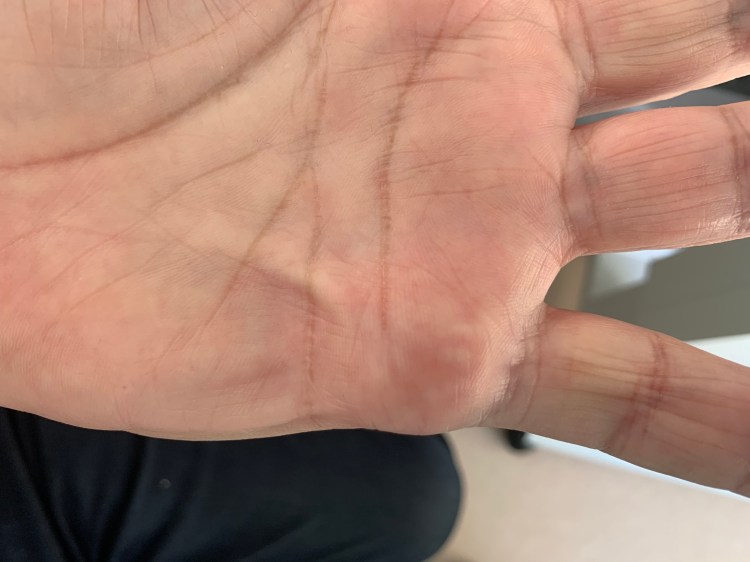
Pyogenic Granuloma
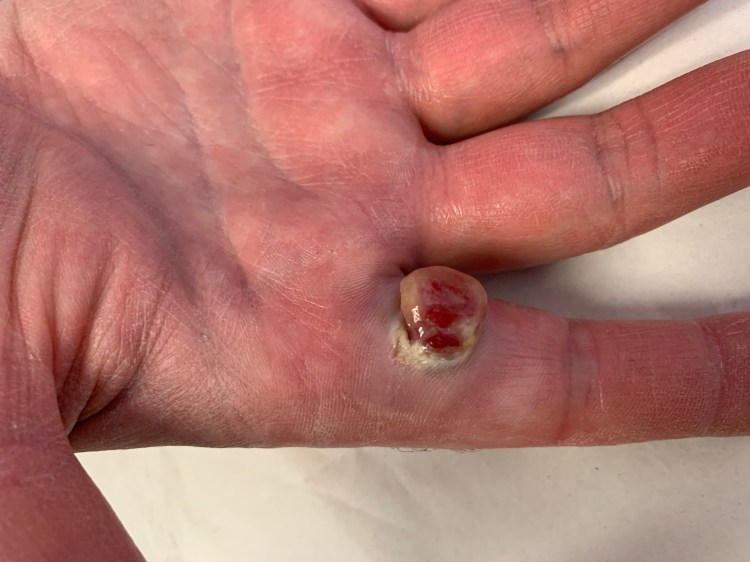
This is a benign lesion with no obvious cause. They can arise from a site of very trivial trauma or injury anywhere in the hand and wrist. They often grow rapidly and cause some bleeding if knocked. They can be associated with infection, although the lesion itself is not infectious. Unfortunately, they do not tend to resolve spontaneously and surgical treatment is often necessary.
Giant cell tumour of tendon sheath
This is the most common solid lump in the hand. It arises from the cells lining the tendon sheath but can occur at any location. The term “giant cell” refers to the appearance of the cells under a microscope. It is a slow growing, firm lump which can be lobulated. It is a benign lump that does not spread, but tends to grow larger if left untreated. Local recurrence rates are as high as 30%.

Lipomas
These are fatty lumps and are the commonest lump through the body. It is a benign slow growing, painless lump. They are often soft, mobile and felt quite easily just beneath the skin.
Fibromas
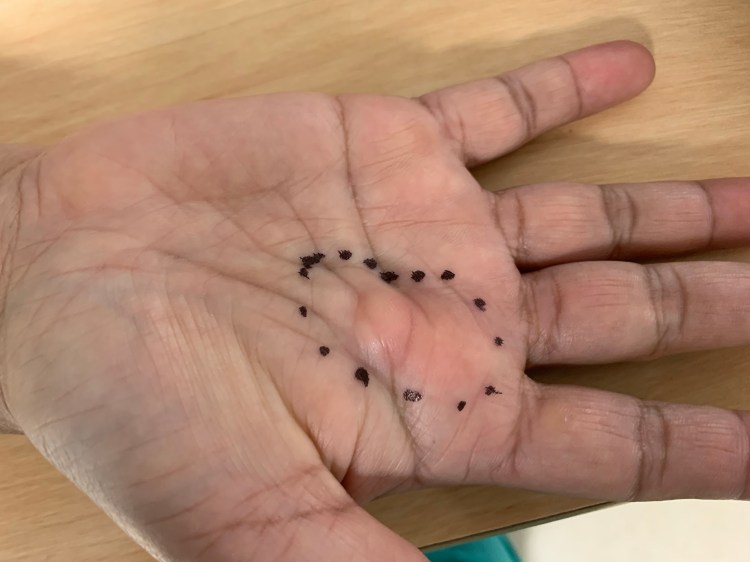
These lumps arise from the fibrous cells of the body’s connective tissue. They are benign and typically lie just below the surface of the skin. They may be associated with an injury.

Neuromas
These lumps arise from nerve cells. They can be as a result of an injury to a nerve. When the end of the nerve becomes disconnected, it later forms a bulb or mass of scar tissue during the healing process. They may also arise from overgrowth of the cells that make up the nerve (Schwannoma). These are slow-growing, usually painless lumps. They may cause some altered sensation.
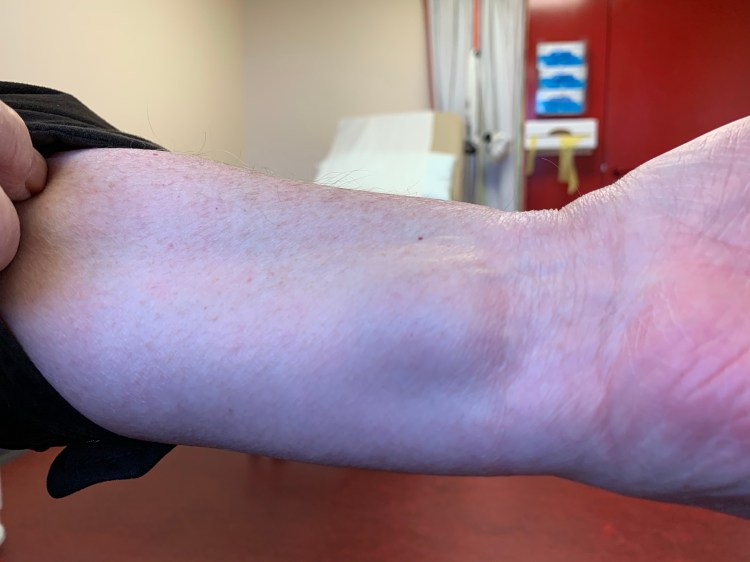
Glomus tumours
These are benign tumours of the vascular tissue responsible for temperature regulation of the skin. They are often very small and sensitive to changes in temperature, particularly the cold. They are commonly seen in the fingertips under the nail. Surgical excision is usually successful in removing the discomfort but recurrence is common.

Bouchards and Heberdens nodes
These are bony lumps that grow near the middle joint (PIP joint) and the end joint (DIP joint) of the fingers. They are benign and are associated with arthritis of the fingers. See our information leaflet on Osteoarthritis of the hands.

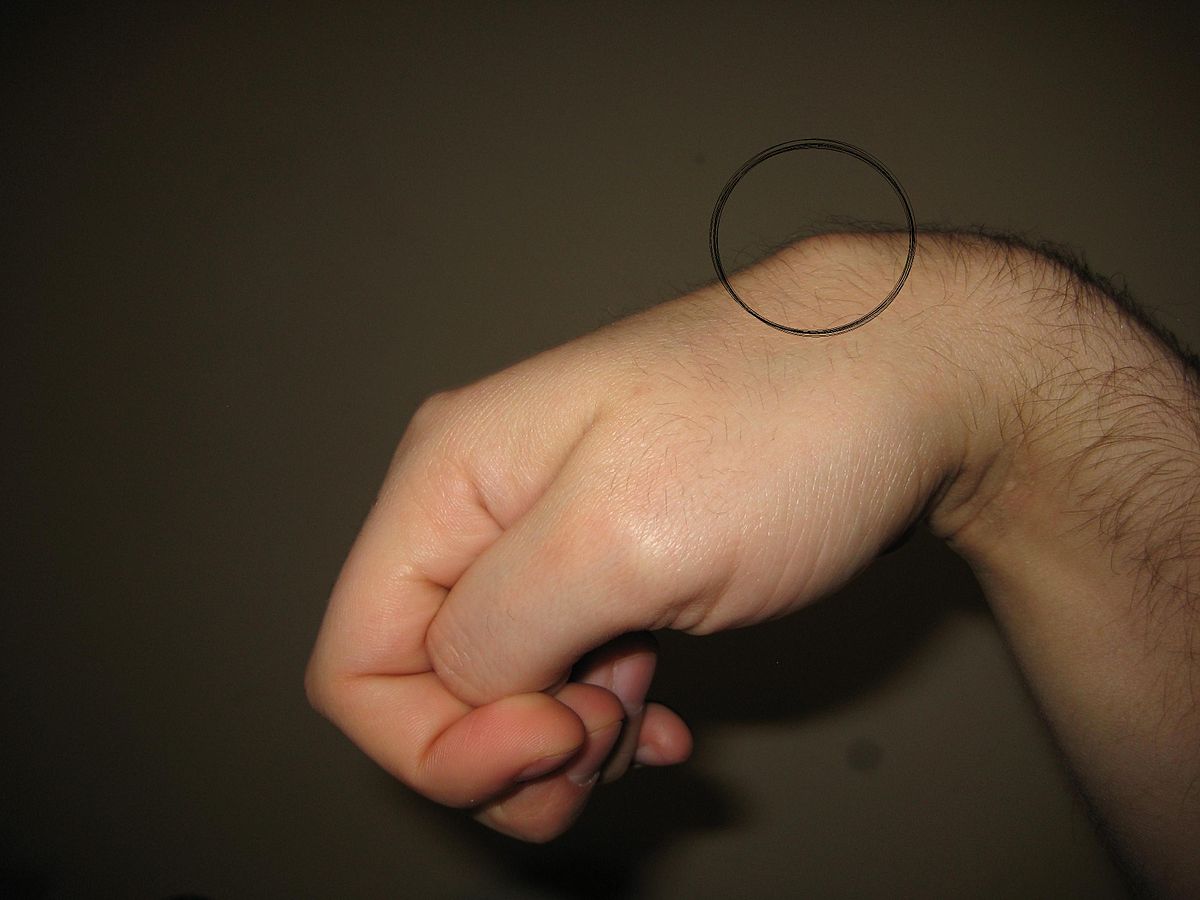
Carpal Boss
This is an overgrowth of bone at the back of the hand. Its appearance is similar to a bony spur and is essentially an area of osteoarthrtitis occurring at the junction of the long bones of the hand (metacarpals) and the small bones of the wrist (carpal bones). It feels firm and is fixed in position.
Can you get cancer of the hand or wrist?
Often when a lump appears anywhere in the body, the concern is that this might be a cancerous lump. Fortunately, cancer in the hand and wrist is extremely rare. The most common types of cancers that originate in the hand are skin cancers such as, basal cell carcinomas, squamous cell carcinomas and melanoma. Other cancers are even more rare but include sarcomas of the soft tissue or bone. These represent less than 1% of all cancers in adults. It is also possible, again rare, that cancer may spread from other organs, such as the lung or the breast to the hand and wrist.
Ultimately, if you have a rapidly growing lump that is becoming more painful, it is important that you see a doctor in order to determine the best course of action.

© Fife Hand Service 2021
 Lothian Virtual Hand Clinic